
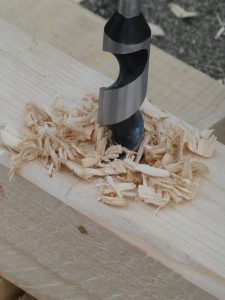
Choosing the right drill bit is important. While they are all used to create holes in objects, some of them are better suited for specific materials than others. Cobalt and titanium drill bits, for instance, offer superior cutting power for metal, whereas brad point drill bits are typically used for wood. For a better understanding of brad point drill points and how they differ from other types, keep reading.
What Are Brad Point Drill Bits?
Brad point drill bits are characterized by a sharp point in the center. They are used to create clean, high-precision holes in soft materials, primarily wood. The sharp point allows brad point drill bits to maintain their positioning when drilling.
Parts of a Brad Point Drill Bit:
- Point: The point is the sharp, central point that stabilizes a brad point drill bit
- Outer Spurs: Brad point drill bits have cutting spurs on the sides. Known as outer spurs, they score the edges of the hole.
- Cutting Lips: Cutting lips are designed to shave away soft materials from the scored area.
- Flutes: Flutes are spiral grooves that carry excess material from the center of the hole to the exterior for removal.
Why They Are Called Brad Point Drill Bits
They are called “brad point drill bits” because of their tip. The word “brad” has historically been used to refer to small nails or pointed objects. Brad point drill bits feature a pointed, nail-like tip.
Reasons to Use Brad Point Drill Bits
If you’re looking to create holes in wood, plastic or other soft materials, you may want to use a brad point drill bit. They offer a superior level of precision for soft materials compared to many other types of drill bits.
The sharp tip acts as an anchor. When initially drilling into an object, the tip will stabilize the bit so that it doesn’t shift or otherwise move off target. The end result is a more precise cut where the cut with the bit entering the object at the intended location.
Brad Point Drill Bits vs Twist Drill Bits
Both brad point drill bits and traditional twist-style drill bits have helical ridges. These ridges allow them to create holes in objects by scooping and carrying away material. The difference lies in the tip.
Twist drill bits generally have a flat tip, whereas brad point drill bits feature a sharp and pointed tip. Twist drill bits offer a versatile and economical drilling solution for a variety of materials, but they may wander. Brad point drill bits, on the other hand, stay in place thanks to their pointed tip.