
Disconnecting and reconnecting pipes can be laborious. Assuming the pipes use permanent fittings, you may have to cut them. An alternative to permanent fittings, however, is pipe unions. Pipe unions eliminate the need for cutting while allowing pipes to be quickly connected and disconnected. Here’s everything you need to know about pipe unions.
What Are Pipe Unions?
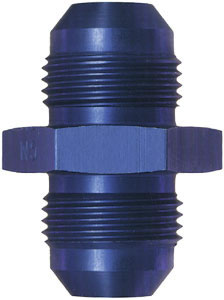
Pipe unions are specialized fittings that connect two threaded pipes (or tubes). As shown in the adjacent photo, they feature threaded ends. You can connect two threaded pipes to the ends of a pipe union. If you need to disconnect the pipes, you can simply remove the pipe union.
The Parts of a Pipe Union
You can find different types of pipe unions, but most of them consist of three main parts: A threaded end, a central nut, and another threaded end. When assembled, the central nut will pull the two threaded ends together. This pulling force creates a tight connection that seals and protects the mating surface from leaks.
Pipe Union Thread Styles
Pipe unions are available in different thread styles. Male-male pipe unions, for instance, have external threads on both ends, whereas female-female pipe unions have internal threads on both ends. There are also male-female pipe unions. Rather than featuring all internal or external threads, they feature both types of threads: one end has internal threads, and the other end has external threads.
Pipe Unions vs Couplings: What’s the Difference?
Many people assume that pipe unions and couplings are the same. While they are both used to connect two threaded pipes, they are two different types of pipe fittings with their own unique characteristics.
Pipe unions are typically three-piece fittings, whereas couplings are a single piece. Couplings don’t feature a central nut. Instead, they consist of a single fitting with two integrated threaded ends. Pipe unions, on the other hand, consist of two threaded ends and a central nut. All three pieces can be removed and disassembled.
Couplings create permanent pipe connections. They are typically glued or soldered to the pipes. Pipe unions create temporary pipe connections. They don’t require gluing or soldering.
Because they create temporary pipe connections, pipe unions make it easy to disconnect and reconnect pipes. You can disconnect the pipes by twisting the central nut. Once the nut has been removed, you can then twist the threaded ends off the two pipes — all without rotating or otherwise moving the two pipes.
In Conclusion
Pipe unions offer a practical solution when working with threaded piping systems. Their three-piece design allows for secure connections that can still be taken apart more quickly than with traditional couplings.