
Fuses play an important role in electrical systems. All electrical systems have circuits through which electricity flows. If a circuit experiences a short or becomes overloaded, the connected fuse will “blow” to disrupt the flow of electricity.
Rather than installing them in fuse boxes, however, you may want to use an in-line fuse holder. Fuse boxes and in-line fuse holders both accommodate circuit-breaking fuses, but they work in different ways. Here’s everything you need to know about in-line fuse holders.
Overview of In-Line Fuse Holders
In-line fuse holders are exactly what they sound like: devices that hold in-line fuses. Each in-line fuse holder supports a single in-line fuse.
Understanding In-Line Fuses
All fuses are circuit-breaking devices that protect against overcurrent. When the current flowing through a circuit exceeds a safe limit, the fuse will blow.
Most fuses have a conductive metal wire or strip that’s rated for a maximum amount of amperage. If the current exceeds this amperage limit, the metal wire or strip will melt. Electricity will then no longer be able to travel through the fuse, thereby breaking the circuit and protecting against overcurrent.
While they are all designed for use in circuits, fuses can be installed in different places. Fuse boxes, for instance, are containers that hold multiple fuses, each of which typically protects a single circuit. In-line fuse holders, on the other hand, are devices that support a single fuse for a single circuit. If a fuse is installed in one of these holders — or elsewhere directly in a circuit — it’s considered an in-line fuse.
How In-Line Fuse Holders Work
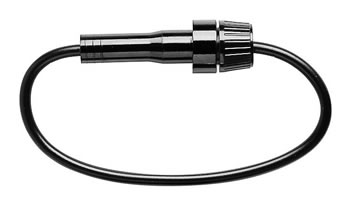
In-line fuse holders feature a container that connects to two wires. To use an in-line fuse holder, you’ll need to open the container. This is typically done by twisting a knurled cap so that it opens. Once open, you can place the fuse inside of the container.
Next, you’ll need to connect the wires to the in-line fuse holder. If the circuit has a single wire, you can cut the wire, after which you can place the two ends of the wire into the fuse holder’s container. With the fuse and wires installed, you can close the container by screwing the knurled cap in the opposite direction. There are different types of in-line fuse holders, but most work in this way.