
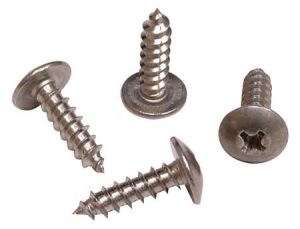
Contrary to common belief, not all screws have the same design. You can find them in different types, such as Type A and Type AB. They are still used to fasten objects, but there are subtle nuances between these two types that affect their utility and performance. For a better understanding of Type A and Type AB screws, keep reading.
What Are Type A Screws?
Type A screws are self-tapping screws with a sharp point and coarse threads. Their threads aren’t aligned tightly together. Instead, they are spread farther apart than other types of screws.
Like all self-tapping screws, Type A screws create their own threads. You don’t have to cut internal threads before installing them. As you drive a Type A screw into an object, its coarse exterior threads will create internal threads in the object.
What Are Type AB Screws?
Type AB screws are self-tapping screws with a sharp point and fine threads. Their threads are packed more tightly together. Type AB screws create their own threads as well, which typically speeds up installation.
Type AB screws combine features of other screw types. They feature the sharp gimlet-based point of Type A screws with the fine, tightly packed threads of Type B screws.
Differences Between Type A and Type AB Screws
While they both create their own threads, Type A and Type AB screws aren’t the same. Type A is one of the earliest types of self-tapping screws. They’ve been around since the early 1960s. Since then, their usage has increased and spread to a wide range of industries. Type AB is a newer screw type that emerged after Type A.
Type A and Type AB screws have different thread geometries. Type A screws have fewer and deeper threads, whereas Type AB screws have shallower and more threads.
With their deep threads, Type A screws offer a better grip when driven into soft material, such as wood. Type AB screws have a greater total number of threads, which allows them to distribute loads more effectively.
Type A and Type AB screws both support different materials. As previously mentioned, though, Type A screws are commonly used in wood because of their excellent grip. Type AB screws, on the other hand, are often used in sheet metal.
While neither type requires precut threads, many people will agree that Type A screws are easier to install. They penetrate quickly in soft materials, and they require less torque to get started. As a result, Type A screws are generally easier to install than their Type AB counterparts.
In Conclusion
Type A screws offer a simple, reliable solution for softer materials. Their deep threads can bite quickly and hold firmly with minimal effort. Type AB screws take a more balanced approach, trading some of that aggressive grip for finer threads that spread load more evenly and perform better in tougher materials like sheet metal.